Review: 12 Food Social Media Templates for Client Projects
When a client approaches me with a request to launch a new handmade food brand, the pressure is immediate. They need visuals that scream "fresh," "delicious," and "trustworthy" within the first three seconds of a social media scroll. Recently, I evaluated 12 Food Social Media Templates as a potential solution for a boutique artisan bakery looking to revamp their Instagram presence and prepare for a seasonal pop-up event. As a professional graphic designer who works extensively with branding, packaging, and digital marketing visuals, my job isn't just to find something pretty; it is to find a graphic design asset that functions reliably under real-world commercial constraints.
First Impressions: Mood and Visual Identity
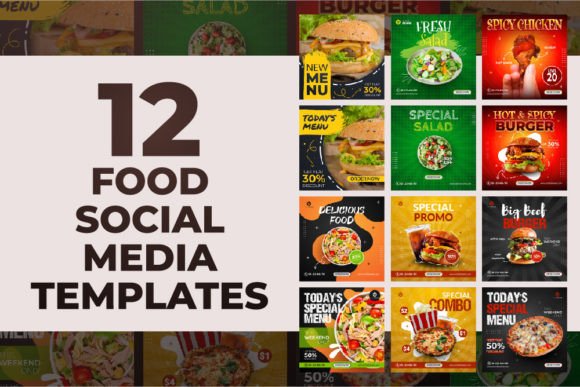
The initial download of this collection reveals a distinct culinary atmosphere. Unlike generic clipart that often feels stiff or overly corporate, these templates capture the warmth of a home kitchen mixed with modern editorial flair. The visual elements suggest a style that fits perfectly for small business branding, particularly for Etsy shops, local cafes, or crafters selling printable goods. The color palettes feel organic, leaning towards warm earth tones and soft pastels that evoke appetite and comfort. This is not a design bundle meant for a high-tech startup or a sleek corporate law firm; it is tailored for the handmade business sector where emotional connection drives sales.
From a creative standpoint, the layout structures are intuitive. They understand the rhythm of a feed. When I opened the files, I immediately saw how they could support a cohesive brand identity. The balance between text space and imagery is well-considered, allowing for headlines that grab attention without overwhelming the viewer. It feels like a curated selection rather than a random dump of assets, which is rare in the creative marketplace.
Real-World Application: Beyond the Feed
While the primary use case is obviously social media graphics, a savvy designer looks for versatility. I tested these assets against various project types to see if they could stand alone or serve as supporting elements. For the bakery client, we explored using specific illustrations from the set for product labels and packaging design. The resolution was crisp enough to hold up on small stickers and tote bags, proving its value as a versatile design asset.
In the realm of marketing visuals, these templates shine. Imagine a series of Pinterest pins promoting a new recipe blog post or an email header for a newsletter. The designs translate well into editorial design contexts, such as a digital menu or a flyer for a farmers market booth. For those who work with Cricut projects or sublimation printing, the vector-friendly nature of many elements (assuming SVG availability) allows for easy scaling. You can take a single icon from the 12 Food Social Media Templates collection and turn it into a custom sticker design or a decal for a delivery van.
I also considered their utility for print-on-demand sellers. The aesthetic aligns perfectly with current trends in kitchen decor and apparel. A t-shirt design featuring one of these layouts would likely resonate with foodies and home cooks. However, the success of such a commercial design depends heavily on how the asset is integrated into the final mockup.
Strategic Placement: Where It Shines and Where to Pause
Understanding where to place a design element is just as important as selecting it. These templates excel in large layout areas, hero graphics, and product mockups where they can breathe. They are ideal for creating themed collections, such as a "Summer Grilling" campaign or a "Holiday Baking" series. In these contexts, the detailed illustrations add depth and character, elevating the perceived value of the product being sold.
However, there are scenarios where caution is required. If you are working on a minimalist branding project that demands extreme simplicity, the decorative flourishes might feel too busy. Similarly, for professional corporate materials requiring strict adherence to a clean, geometric hierarchy, these assets might clash with the desired tone. I advise testing them carefully in crowded layouts. If the background is complex or the text density is high, the intricate details of the food illustrations could get lost, causing visual noise.
For logo design, these templates should generally be treated as inspiration or secondary elements rather than the core mark. A logo requires scalability and memorability that a full template might not provide. Instead, extract key icons to build a unique symbol, then use the rest of the collection for the broader visual hierarchy of your marketing materials.
Technical Considerations for the Professional Designer
Before committing to a client project, a rigorous technical check is non-negotiable. First, always test the asset in black and white. Does the design still hold its structure when color is removed? This ensures the visual hierarchy relies on shape and contrast, not just hue. Next, preview the files at both small and large sizes. On a mobile screen, do the text legibility issues arise? Can the details be appreciated on a large poster?
If the package includes PNG files, inspect the transparency edges closely. Are they jagged or smooth? For Social Media Templates intended for quick editing, the layer organization within the source file (like PSD or Canva format) is critical. I recommend opening the files to ensure layers are named logically, saving hours of frustration during the client revision process. If SVGs are included, verify their editability. Can you easily change colors to match a client's brand guidelines? Comparing these assets against serif fonts, sans serif fonts, script fonts, and handwritten styles will help you determine the best typographic pairing.
Finally, never overlook the legalities. Confirm the commercial license explicitly covers the intended use. Some digital products restrict usage in print-on-demand items or resale. Ensure you have the right to modify the files for a client. This due diligence protects your reputation and your bottom line.
Final Verdict: A Solid Tool for the Creative Toolkit
After putting 12 Food Social Media Templates through its paces, I can confidently say it is a valuable addition to any designer's arsenal, provided it is used with intention. It bridges the gap between amateur aesthetics and professional polish, offering a shortcut to high-quality web design and social content without sacrificing artistic integrity. Whether you are a blogger, a publisher, or a small business owner looking to elevate your Etsy product listings, these templates offer a solid foundation.
The emotional appeal is strong, fostering trust and engagement with audiences who appreciate authentic, handcrafted vibes. While it may not suit every single niche, for the food, lifestyle, and craft sectors, it delivers exactly what is needed: a polished, modern design direction that respects the nuances of brand consistency. By following the practical checks outlined above, designers can leverage these assets to create campaigns that are not only visually stunning but also commercially viable.